

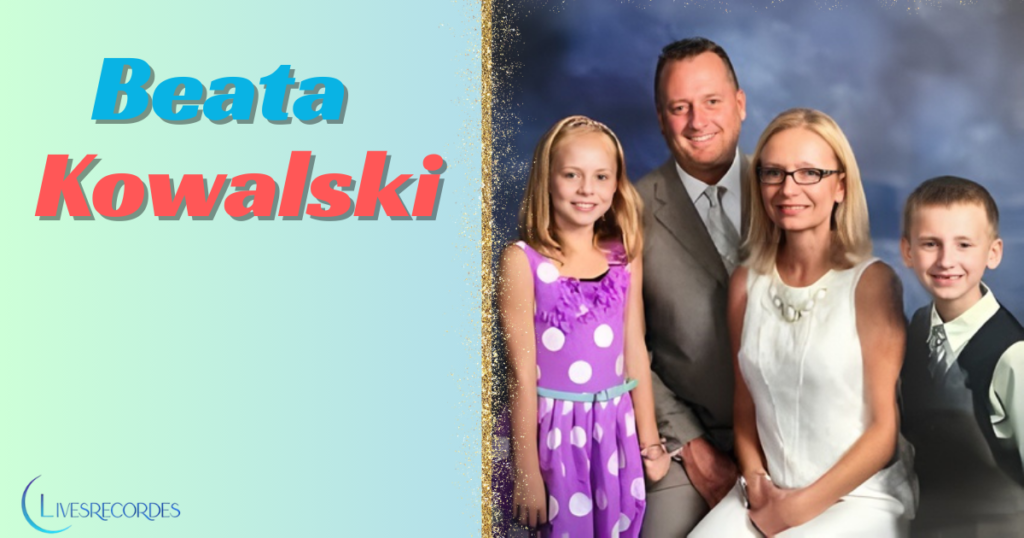
Who Is Beata Kowalski?
Beata Kowalski was a Polish-American registered nurse and devoted mother whose life became widely known after a tragic medical and legal battle involving her daughter, Maya Kowalski. She gained global attention through the 2023 Netflix documentary Take Care of Maya, which explored her fight to secure treatment for her daughter’s serious illness and the heartbreaking consequences that followed.
So, who is Beata Kowalski? She was not a celebrity, politician, or public figure. She was a healthcare professional and a mother who believed deeply in advocating for her child. Her name became well-known because of her determined efforts to seek treatment for Maya’s Complex Regional Pain Syndrome (CRPS) and the accusations that arose during that process.
She is remembered as a loving parent who stood firm in her beliefs. Her story sparked national debate about medical ethics, parental rights, child protective services, and rare disease treatment in the United States.
| Field | Details |
|---|---|
| Full Name | Beata Kowalski |
| Profession | Registered Nurse |
| Nationality | Polish-American |
| Date of Birth | February 24, 1973 |
| Place of Birth | Poland |
| Age at Death | 43 years old |
| Zodiac Sign | Pisces |
| Spouse | Jack Kowalski (Firefighter) |
| Children | Maya Kowalski, Kyle Kowalski |
| Known For | Featured in Netflix documentary Take Care of Maya |
| Major Issue | Legal battle over daughter’s CRPS treatment |
| Hospital Involved | Johns Hopkins All Children’s Hospital |
| Year of Controversy | 2016 |
| Date of Death | January 8, 2017 |
| Cause of Death | Suicide |
| Legacy | Sparked debate on parental rights & medical ethics |
2. Personal Details
Full Name
Beata Kowalski
Nickname
No public nickname is known.
Date of Birth
February 24, 1973
Place of Birth
Poland
Age (as of 2026)
If she were alive today, she would be 53 years old. She passed away at the age of 43 in 2017.
Zodiac Sign
Pisces
Also Read About: noah-pozner
3. Physical Appearance
There are no verified public records detailing Beata Kowalski’s exact height, weight, or body measurements. Since she was a private individual before media coverage, physical details were never officially documented.
Based on available photographs and video footage from the documentary, she appeared to have a healthy, average build, with light-colored eyes and dark blonde to brown hair. Her appearance reflected a working professional—often seen in practical clothing typical of a nurse and mother managing daily responsibilities.
She maintained a simple and natural look, reflecting her focus on family and career rather than public attention.
4. Early Life & Childhood
Beata Kowalski was born and raised in Poland during the early 1970s. She grew up in a traditional Polish household at a time when the country was experiencing social and economic changes. Her early life shaped her strong values of hard work, discipline, and family loyalty.
As a child, she likely experienced a modest upbringing. Many Polish families during that period focused heavily on education and stability. These influences may have inspired her to pursue a professional career in healthcare.
Later, her family immigrated to the United States in search of better opportunities. This major transition would shape her identity as both Polish and American, blending two cultures into her life journey.
5. Education
Beata pursued higher education in the United States and earned a nursing degree, becoming a Registered Nurse (RN). While the exact institutions she attended are not publicly documented, she successfully met the professional requirements necessary to practice nursing in the U.S.
Her training qualified her to work in specialized healthcare settings. She later worked in home infusion nursing, a field requiring precision and medical knowledge.
Her educational background played a key role in her confidence when advocating for her daughter’s medical treatment. As a nurse, she understood medical terminology, treatment plans, and hospital procedures.
6. Family Background
Public information about Beata’s parents is limited. Their names and professions are not widely known. However, they played an important role in immigrating to the United States, seeking improved living conditions and opportunities for their children.
There are no confirmed public records about siblings.
Her strongest family bond later centered around her husband and children. Her family life became the foundation of her identity and her motivation.
7. Relationship & Personal Life
Beata Kowalski was married to Jack Kowalski, a firefighter. The couple built their life together in the United States and later settled in Venice, Florida.
They had two children:
- Maya Kowalski, born around 2006
- Kyle Kowalski, her older brother
Beata was known as a hands-on mother. She balanced her career as a nurse while caring deeply for her children. Her marriage appeared stable prior to the medical crisis that affected their family.
There is no public dating history, as she lived a private life before media coverage.
8. Nationality, Religion & Ethnicity
Nationality
Polish (by birth), later a U.S. resident/immigrant
Religion
No confirmed public information about her religious beliefs.
Ethnicity
Polish
Beata’s cultural roots remained important to her identity. She carried the values of resilience and family loyalty commonly associated with Polish heritage.
9. Career Journey
Beata began her professional journey after becoming a Registered Nurse. She worked in healthcare for several years, including positions in home infusion nursing, where she administered specialized treatments to patients at home.
After living in Chicago, the family moved to Florida for better opportunities and lifestyle benefits. She continued working in healthcare while managing family responsibilities.
Her career followed a traditional nursing path. There were no public controversies or professional disputes before 2016. Her life changed dramatically when her daughter’s medical condition required complex treatment.
10. Professional Style & Public Image
Before 2016, Beata was simply seen as a dedicated healthcare professional and mother. She was known for being knowledgeable and direct in medical discussions.
During her daughter’s hospitalization at Johns Hopkins All Children’s Hospital, staff members reportedly described her as demanding. However, supporters view her behavior as strong maternal advocacy.
After the release of Take Care of Maya, public perception shifted. Many viewers saw her as a protective mother caught in a complex system. Critics, meanwhile, emphasized the difficulty of diagnosing rare illnesses.
Her public image today is largely sympathetic, especially among those advocating for parental rights and rare disease awareness.
11. Reason for Fame
Beata Kowalski became widely known due to the 2016 medical crisis involving her daughter’s Complex Regional Pain Syndrome (CRPS) treatment.
When Beata requested high-dose ketamine therapy—based on prior improvement—hospital staff suspected Munchausen syndrome by proxy, a condition in which a caregiver is accused of fabricating illness.
Child Protective Services removed Maya from her custody. Beata was separated from her daughter for 87 days.
Her story gained international recognition after the Netflix documentary and a major lawsuit filed by her family.
Also Read About: shohei-ohtani
12. Major Works / Notable Contributions
Beata did not create films, books, or businesses. However, her story contributed to:
- Raising awareness about CRPS
- Sparking debate about child protective services
- Encouraging discussion about parental medical advocacy
Her influence came through the documentary and court case rather than traditional achievements.
13. Books / Publications
Beata Kowalski did not author any books, research papers, or articles.
14. Achievements & Awards
There are no official awards or recognitions documented for Beata. However, many supporters view her as a symbol of maternal dedication and advocacy.
15. Controversies
The major controversy involved accusations from Johns Hopkins All Children’s Hospital that she was exaggerating or fabricating her daughter’s illness.
This led to court proceedings and Maya’s temporary removal.
In 2023, the Kowalski family won a lawsuit awarding over $200 million, though legal appeals followed. The case highlighted tensions between parental rights and hospital reporting duties.
16. Challenges & Struggles
Beata faced extreme emotional and legal stress. She endured:
- Her daughter’s severe pain from CRPS
- Separation from Maya
- Court hearings and supervision restrictions
- Public accusations
On January 8, 2017, overwhelmed by the situation, she died by suicide at age 43. She left a note expressing deep anguish and love for her daughter.
17. Earnings & Income Sources
Her primary source of income was her nursing salary. She had no business ventures, endorsements, or social media income streams.
18. Business Ventures & Investments
There are no documented business investments or entrepreneurial activities associated with Beata Kowalski.
19. Net Worth
There is no verified estimate of her net worth. She lived a modest, middle-class life as a healthcare worker.
20. Lifestyle & Assets
The Kowalski family lived in Venice, Florida. They maintained a simple lifestyle typical of a working family.
There are no reports of luxury cars, expensive properties, or lavish spending.

21. Hobbies & Interests
- Spending quality time with her children
- Learning about medical research
- Cooking traditional Polish meals
- Family travel and beach outings in Florida
- Reading healthcare-related materials
22. Social Media Presence
Beata did not maintain public social media accounts. Her story became known through media coverage rather than online influence.
23. Philanthropy & Social Work
There are no records of formal charity organizations founded by her. However, her story indirectly contributed to increased awareness about CRPS and parental rights.
24. Media Appearances & Interviews
Beata did not appear in media interviews during her lifetime regarding the controversy.
Her life was featured posthumously in Take Care of Maya, which included family footage, legal records, and interviews with relatives.
25. Quotes & Philosophy
Her recorded statements focused on love for her daughter and belief in her medical treatment plan.
She believed strongly in advocating for her child, guided by both medical training and maternal instinct.
26. Interesting Facts
- She moved from Chicago to Florida before the medical crisis.
- She worked as a home infusion nurse.
- She balanced full-time nursing with motherhood.
- Her case brought attention to child removal rates in Florida.
- Her story became one of Netflix’s most discussed documentaries of 2023.
27. Future Plans & Goals
Beata passed away in 2017, so she did not have the opportunity to pursue future plans. Her family later continued legal and advocacy efforts.
28. Legacy & Impact
Beata Kowalski’s story continues to influence conversations about rare diseases, parental advocacy, and hospital reporting systems.
The documentary introduced her story to a global audience, prompting debate and emotional reactions.
Her life remains a reminder of how complex medical and legal systems can deeply affect families.
29. Timeline Overview
1973 – Born in Poland
1990s – Immigrated to the United States
2000s – Became a registered nurse and married Jack
2016 – Maya hospitalized and removed from custody
January 8, 2017 – Passed away
2023 – Documentary release and lawsuit verdict
30. Conclusion
Beata Kowalski’s life was not built around fame, but around family and service. She worked as a nurse, raised two children, and believed deeply in protecting her daughter’s health.
Her story became widely known through tragedy. The events surrounding Maya’s hospitalization created national debate about medicine, parenting, and child protection systems.
Today, Beata is remembered as a devoted mother whose life story continues to spark discussion and reflection across the world.
FAQs
She was a Polish-American registered nurse and mother featured in the Netflix documentary Take Care of Maya.
She became known after a hospital accused her of fabricating her daughter’s illness, leading to a major legal case.
She died by suicide on January 8, 2017.
Maya was diagnosed with Complex Regional Pain Syndrome (CRPS).
Yes, her family filed a lawsuit against the hospital and won a large financial award in 2023, which later faced appeals.



Pingback: Jasmine Daze: OnlyFans, Networth, Age, Bio, Career, Height 2025.